

Candid with Deeba
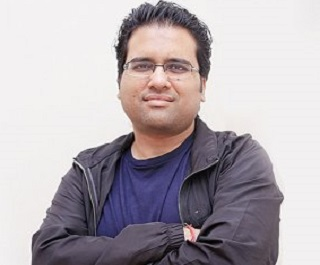
Kanishka Gupta
Literary Agent (CEO, Writer’s Side)
Kanishka, I welcome you to a candid chat with me, Deeba.
The biggest challenge was to establish some credibility in an industry where I was an outsider, an unknown entity. Luckily, I got off on the right note and some of my first books, such as Anees Salim’s Tales From A Vending Machine and Navneet Jagannathan’s Shakti Bhatt shortlisted Tamasha in Bandargaon, got offers from major publishers. Despite this, for the first three-four years I struggled to gain widespread acceptance. Such was the lack of communication that I would land up at every second book launch at IIC and IHC well before the event just to get an audience with editors and follow up on submissions. Some editors would never get back and I had to follow up with them via their junior colleagues. Several literary editors dismissed me as an agent for mass market books even though I have never represented nor wanted to represent writers writing in that genre. It was also impossible to get established writers or well-known journalists and celebrities on my list since they doubted my credentials and abilities. I had no option but to work with and groom debut writers. To this day, I specialize in discovering new voices, although I must admit that market forces and commercial considerations have made me shift my focus to non-fiction. The most memorable moments are too many to list but I am proud of the books I have done with Anees Salim, Ruchira Gupta and Gloria Steinem, Siddhartha Gigoo, Chhimi Tenduf La, Shreyas Rajagopal, Shobha Bondre, Apurva Purohit, Shubha Mudgal, Ali Hashmi, Aditya Sinha and so on.
Before History of Hate I had written and shelved at least half a dozen novels. History was written only when my friend Rahul Soni told me about the Man Asian Prize and how they were open to unpublished writers. I cobbled together an apology of a draft in 3-4 months and made the submission. Surprisingly, the book appeared on the prize longlist. It had already been rejected by every single publisher except Ravi Singh, who was heading Penguin India at the time, and kept pushing me to revise it. ‘It works as a powerful long short story’, he said. ‘As a novel it gets too repetitive beyond a point’. Translator Arunava Sinha was the other literary figure who liked the novel but even his strong recommendations fell on deaf ears. After the longlisting, someone told me that Rupa publications was looking to acquire new fiction. I made the submission on their generic email address without any high hopes. Two days later, I got an offer from them. There was no advance involved but because of the longlisting I was offered higher than standard royalties. The book was published and sank without a trace. I think part of it had to do with the fact that none of the members of literary community took me seriously back then. I remember how a reviewer for a prestigious literary magazine laughed at the suggestion of carrying a review in its hallowed pages. I don’t think I am a writer by temperament. Writing requires preternatural discipline, patience and attention to detail. I, on the other hand, love to multitask. After reading my novel my author Abhijit Dutta summed up my writing career very precisely: ‘This is a book that belongs to the moment it was written. It needed to serve purpose other than literature and I hope it did.’ In hindsight, it did serve a purpose: it helped me start the agency.
All my fiction submissions are first read by Achala Upendran and Neelini Sarkar, both highly skilled and experienced editors. I only step in if they recommend something strongly. And they often talk about award winning potential and the potential of a book to break through globally. I look after all the non fiction myself.
No agent or author can give any inputs about an award. Literary tastes are very subjective and a lot depends on the jury members of a particular prize. As an agent I can only make a strong case to the publisher about the award winning potential of my book. That said, hardly any of the Indian prizes make much of a difference in terms of sales or the author’s marketability overseas. The Indian reader is still fixated on the Booker prize.
I am not sure if writing can be called a ‘ career’ unless you’re a Chetan Bhagat or an Amish Tripathi. However, I don’t see my relationship with my writers as merely a transactional one and like to be by their side through all the stages of publishing. I do believe my authors benefit from my editorial inputs, PR and emotional support. At the same time, I can only make the process smoother, I cannot eliminate the larger problems plaguing the publishing business today. I am a very effective agent, not Superman!
Direct commissioning is the bane of an Indian literary agent. I lose out on at least 10 books every year because of this, although the number is coming down drastically. The hardest job for us is not just signing new authors but retaining them after they’ve established contact with editors. You have to add value at every stage of the publishing process. Of late, I have been doing a lot of PR for my authors since this is one area of publishing that needs a major rethink.
We are open to all genres provided the book is good!
I don’t schedule my work days. But normally, I meet at least one author/ publisher/journalist in a day. I also read submissions and manuscripts, aggressively follow up on pending proposals and manuscript deliveries, talk to current and prospective authors, do PR for my authors on my facebook page and in general. In 2015, translator and Scroll’s books editor Arunava Sinha published my piece on literary agents. Since then, I have been writing regularly for the website’s book pages. So, now some of the day is spent writing ( although of a different kind)!
Pink lemonade!
Write only if you have the talent, passion, discipline and belief in your story idea. Don’t get swayed by external influences and determinants. I know this may sound old-fashioned but it is the only way to go about it.
If you want to know more about our guest, please visit their website below: Website: WritersSide.com
